Sabrina Fonseca / UX
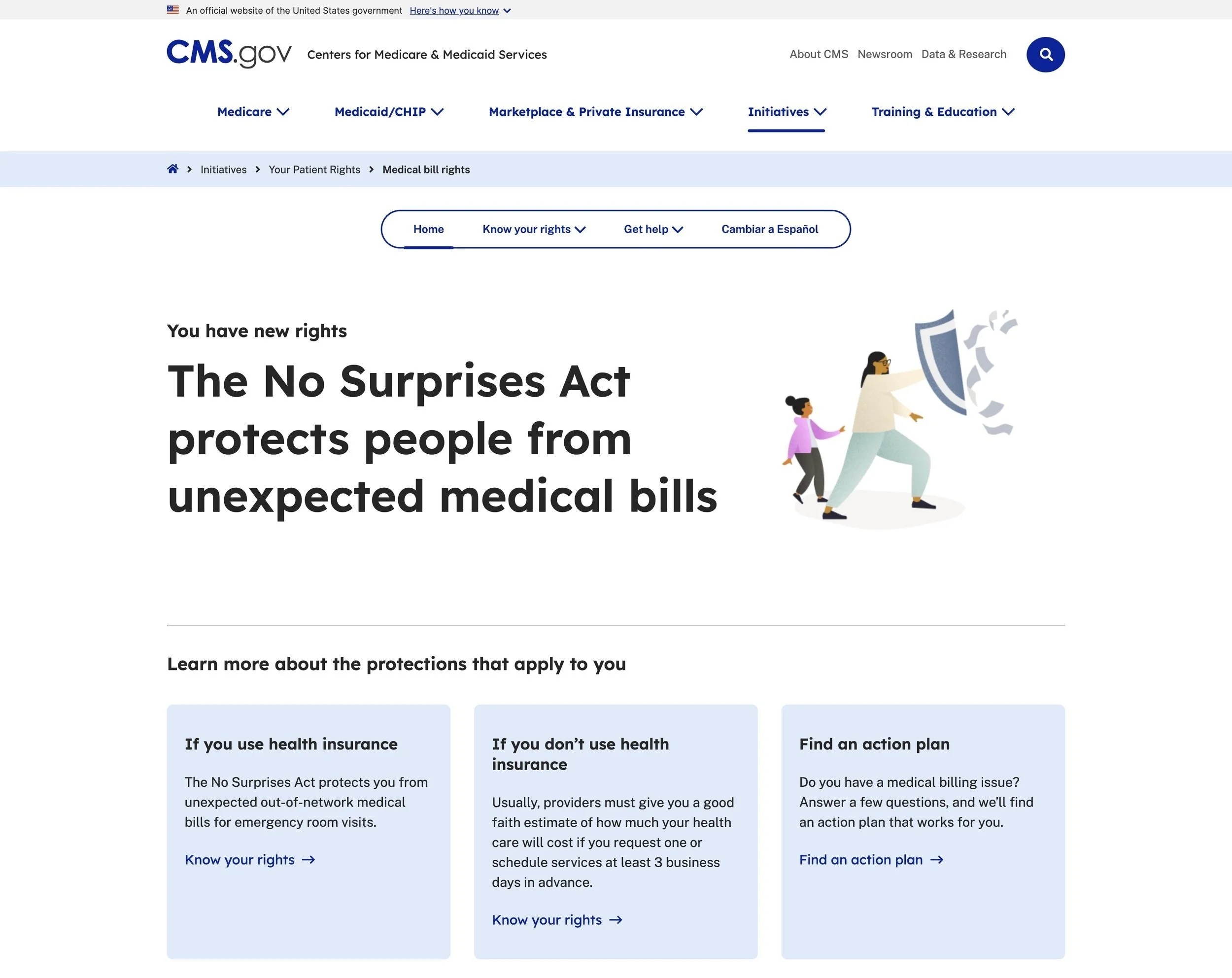
CMS Medical Bill Rights Website
Empowering Patients to Navigate Surprise Medical Bills
Period
2021, 2023
Agency
Coforma
Role
English/Spanish Design Researcher, Information Architect
The challenge: Enable people to understand and act on their new No Surprises Act protections.
US healthcare system patients have historically faced unexpected bills after receiving care or treatment from healthcare providers, coming after urgent care or a scheduled visit or procedure; instead, providers send patients follow-up bills for the remainder of what hasn’t been paid by their insurance company or otherwise. The No Surprises Act established patient protections, creating the opportunity to address medical bill affordability challenges and end surprise medical bills.
My team at Coforma helped CMS help update its systems to receive, store, process, adjudicate, and present information related to cases, complaints, costs, and more. One of the results was www.cms.gov/medical-bill-rights, a mobile-first, bilingual site that presents the public with digestible information and a “Find an action plan” tool.
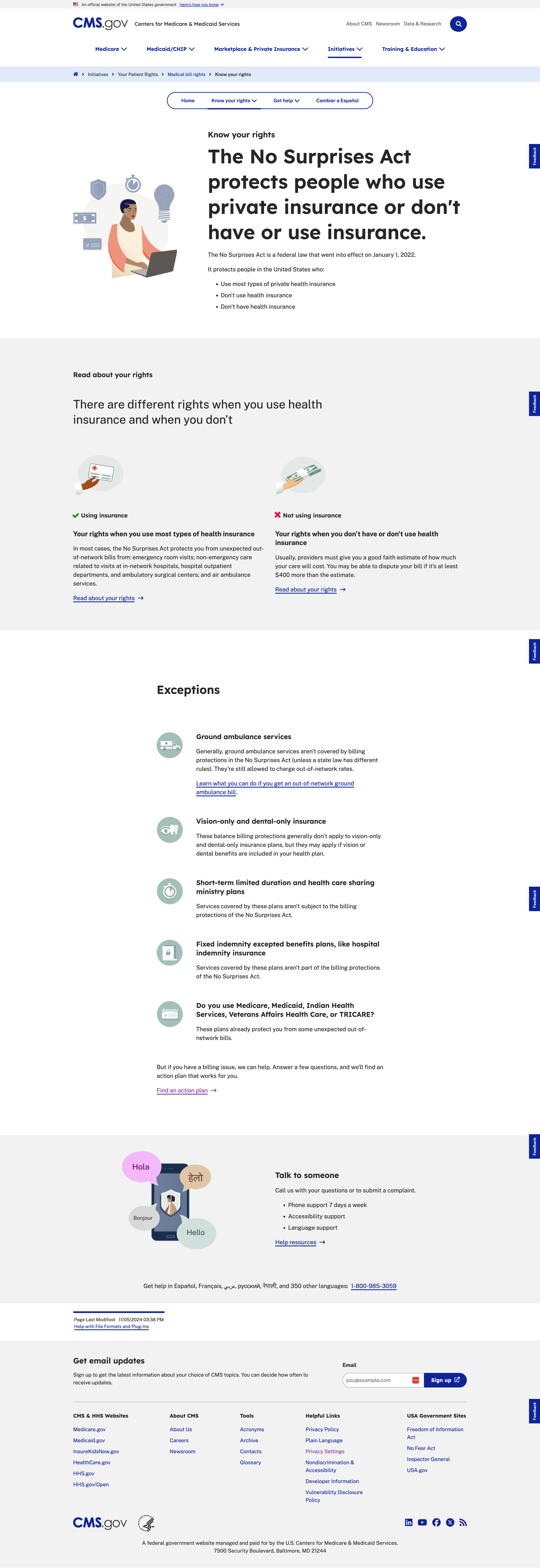
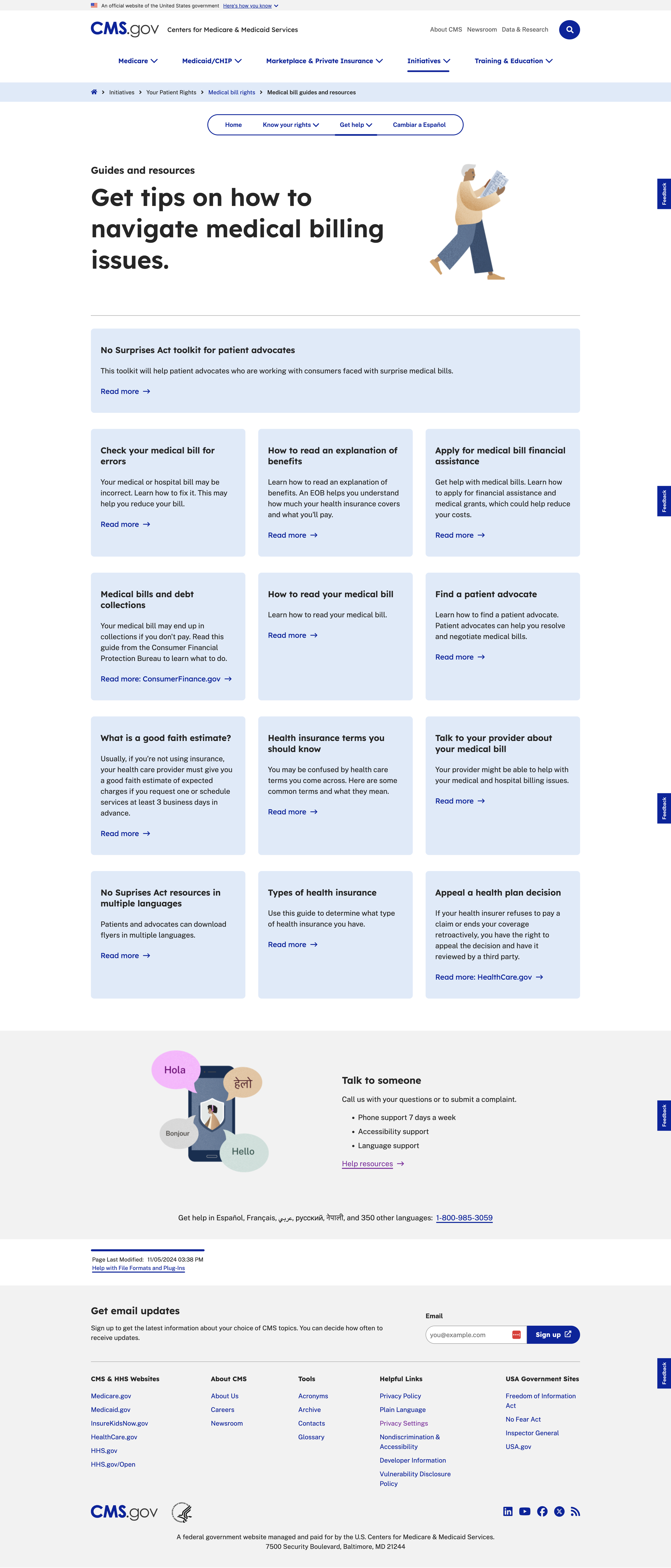
A website strategy to address all medical bill situations
Our research indicated that patients and caregivers needed help beyond what the No Surprises Act could offer, but that could be protected by other legislation. We recommended that CMS created a website that could offer actionable advice to patients in various surprise billing situations as well as seeking to prevent them. This included a conversational routing tool where someone could answer a handful of questions and get an action plan for their surprise bill situation.
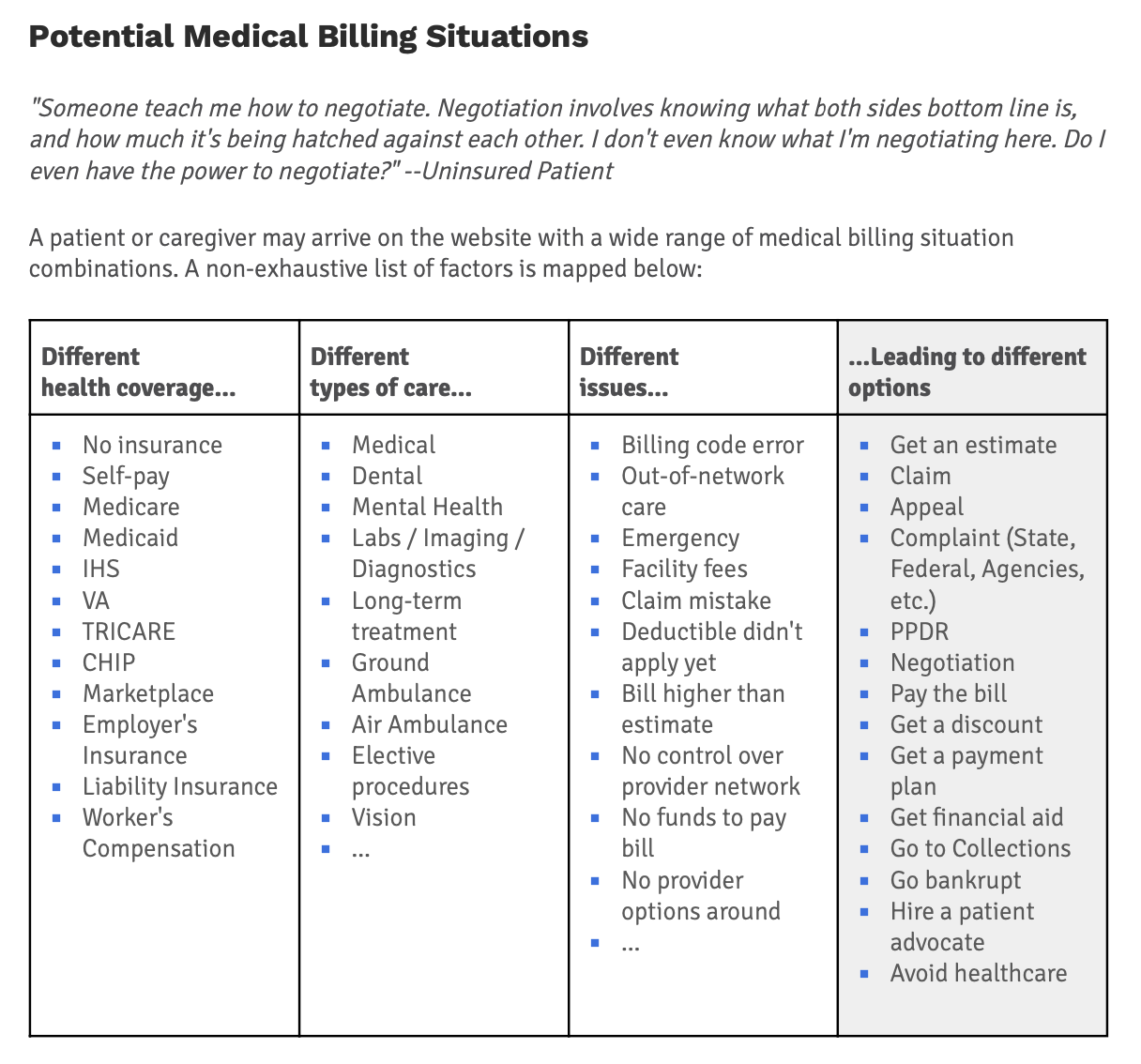
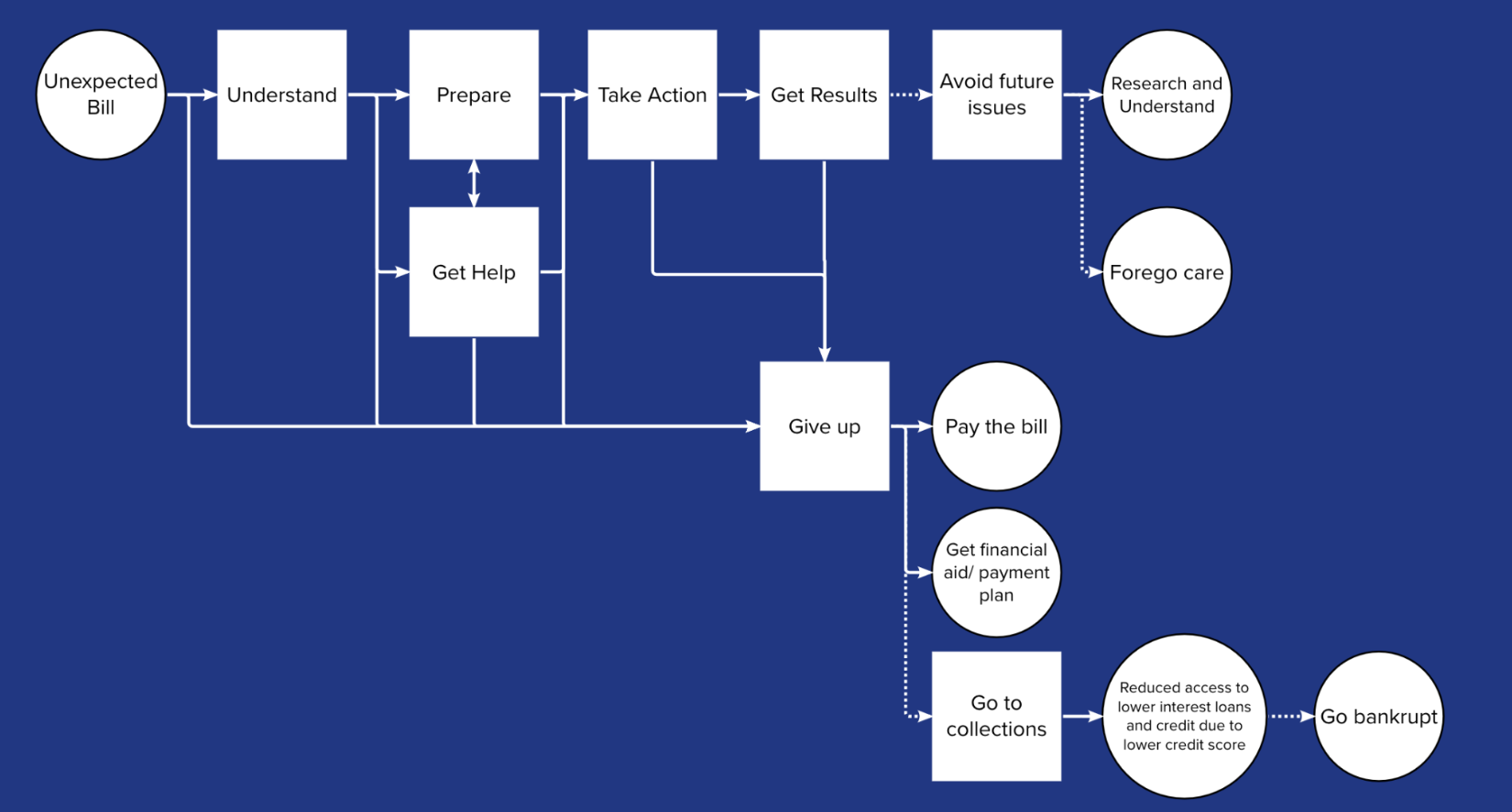
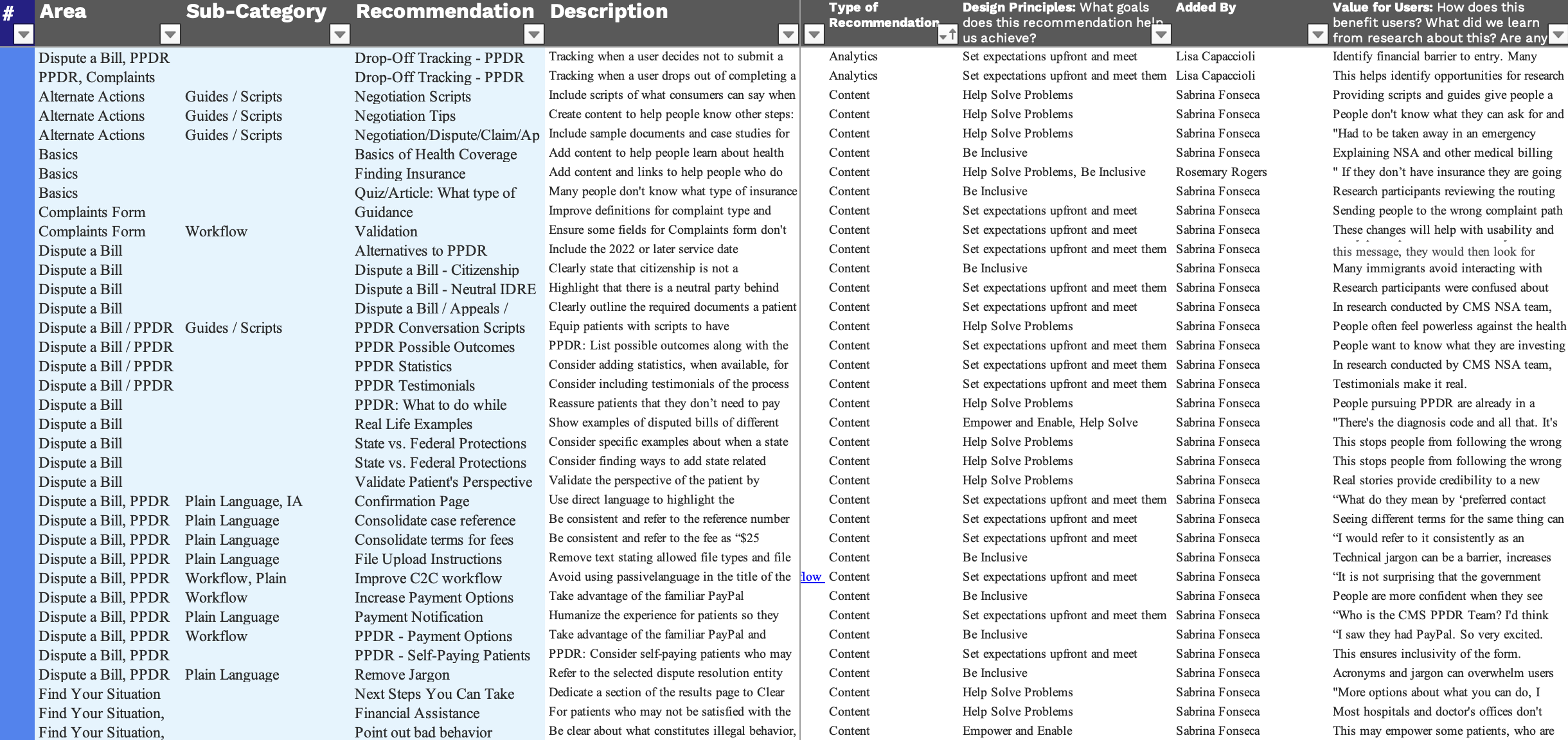
Strategy materials included design principles, archetypes of consumers around medical surprise bills, lists of potential situation variables, user journeys, and a feature and functionality matrix to help prioritize the product roadmap.
Content and usability testing in English and Spanish
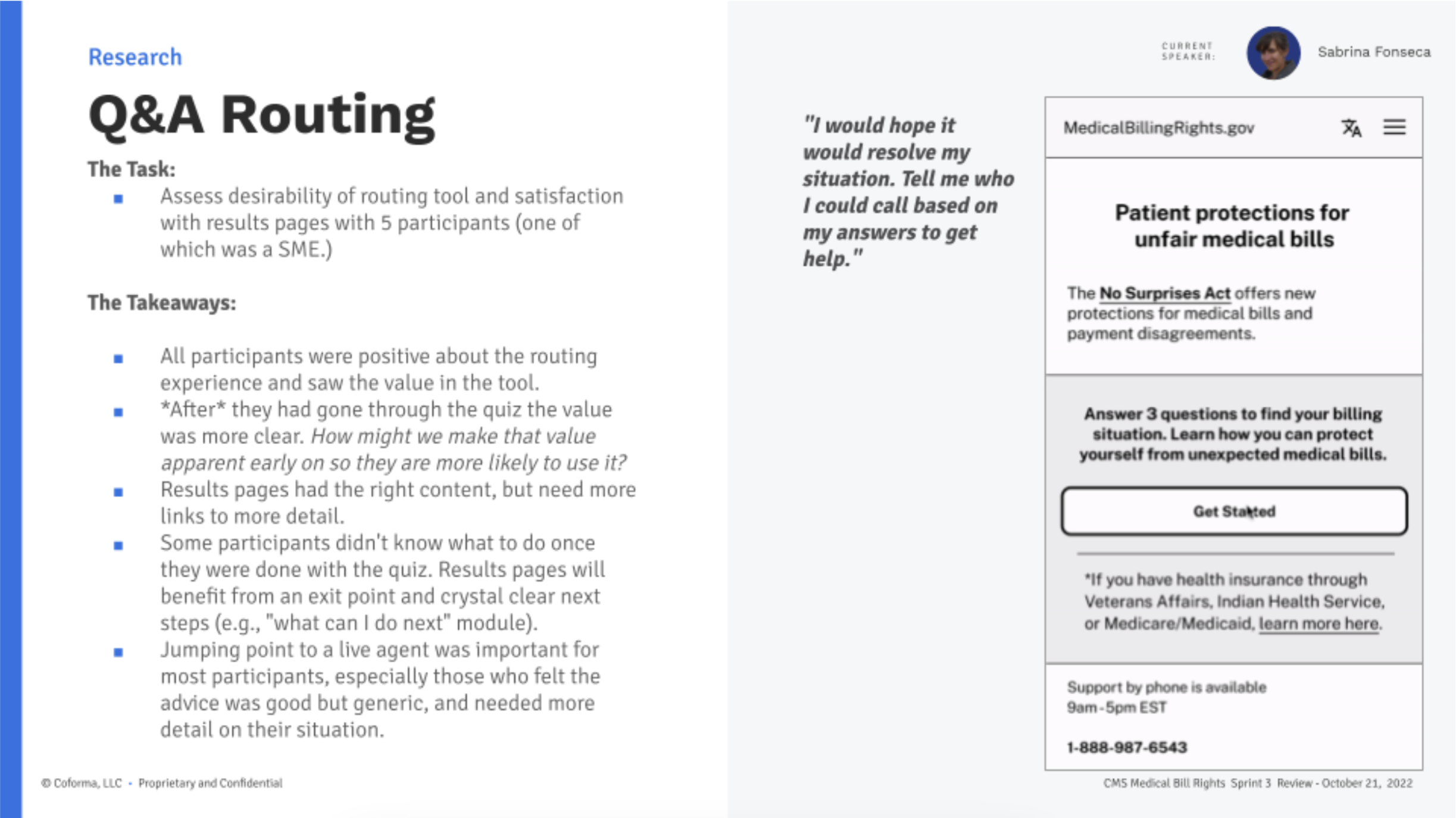
As a team of 2 researchers, we conducted agile testing of content and designs created by the design team, using content-centric methods like tree testing, content, and usability testing. We conducted multiple rounds of testing for a conversational routing tool to help patients find an action plan for various medical bill situations.
Once the English website was translated, I conducted several rounds of content testing with Spanish speakers to ensure complex medical billing terms and processes could be understood by people from various Spanish-speaking countries.
Information architecture and SEO to route patients to actionable content
Once tree testing was completed, we found that many pages in the design needed more content than anticipated to cover the topic, making them very long. I facilitated several team workshops to reshape the website architecture based on flow, search engine optimization, page length, and content objectives. The new architecture performed much better in usability testing.
I also developed a Search Engine Optimization strategy of all pages, with keyword and content recommendations. I followed this up with testing critical pages in a search engine scenario, as many users would not land on the home page from the start.