Sabrina Fonseca / UX
IRS Direct File
User research that made tax filing a positive experience
Period
2023 - 2025
Agency
Coforma
Roles
User Research Team Lead, English/Spanish
Design Researcher, Designer
Background
For several years there has been a call for a free and easy way for people to file their taxes directly with the Internal Revenue Service (IRS). This has been barred by powerful lobbying—an American taxpayer can expect to spend 13 hours and $240 just to prepare and file their annual return. This started to change when the Inflation Reduction Act of 2022 provided the IRS with significant funding to transform and modernize the tax administration.
The IRS launched the Direct File in 2024 as a pilot. Developed in collaboration with the US Digital Service, 18F, Truss, and Coforma, this initiative aimed to provide a free, straightforward method for eligible taxpayers to prepare and file their federal income tax returns.
The pilot launch was extremely successful, so the Coforma team was hired again to continue the work and expand the scope of the tool in the 2025 launch.
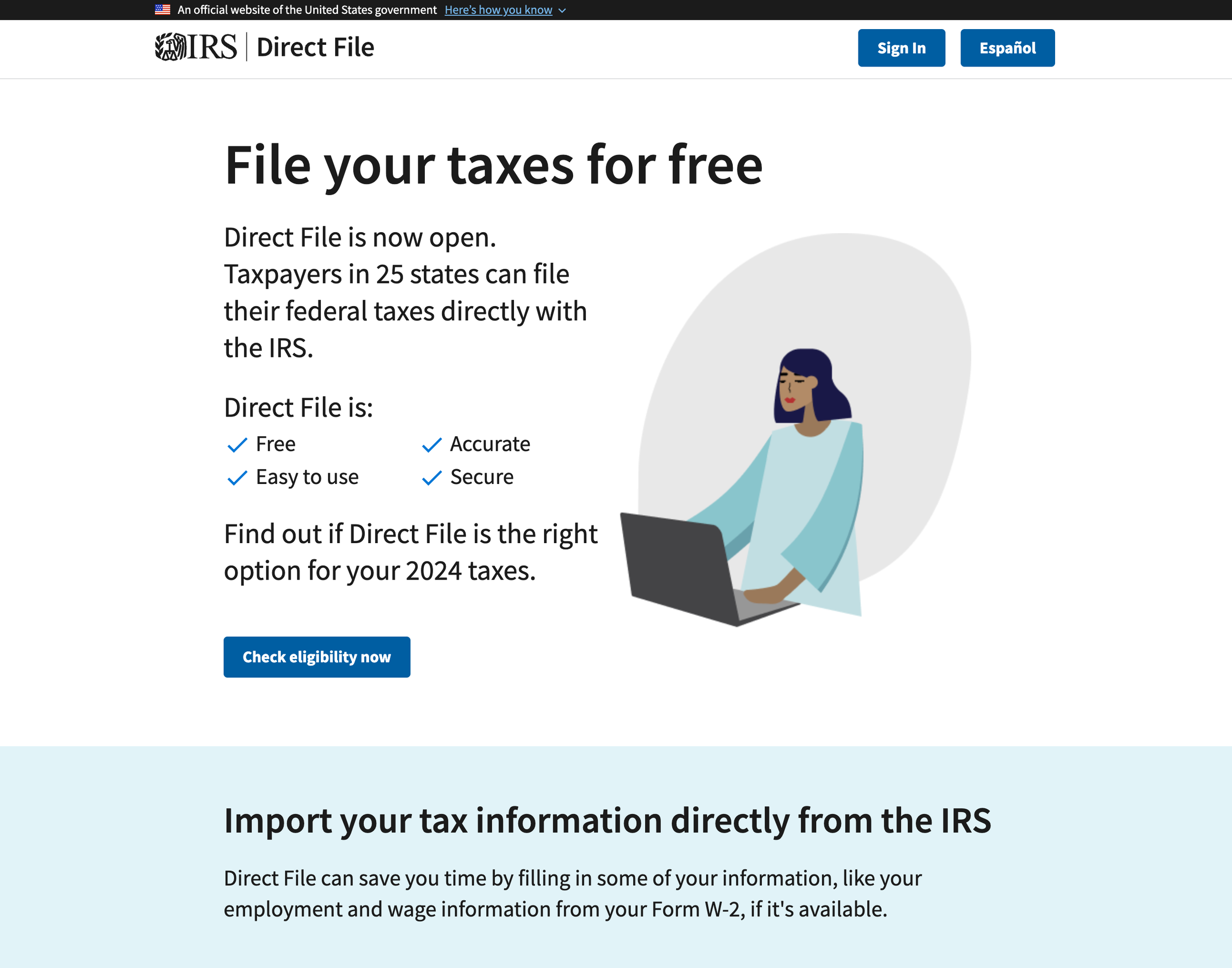
Direct File 2025 Interface - Getting Started
Results
The reception to Direct File in 2024 and 2025 was overwhelmingly positive:
+80 Net Promoter Score
96% survey respondents ranked their experience as Excellent/Above Average
Usability testing updates that resulted in more than 1/3 reduction in tax return rejections
86% respondents said their experience with Direct File increased their trust in the IRS
IRS Direct File received the Fedscoop 50 2024 Innovation of the Year award
99.9% accessibility and gold-standard commendation by the National Federation of the Blind
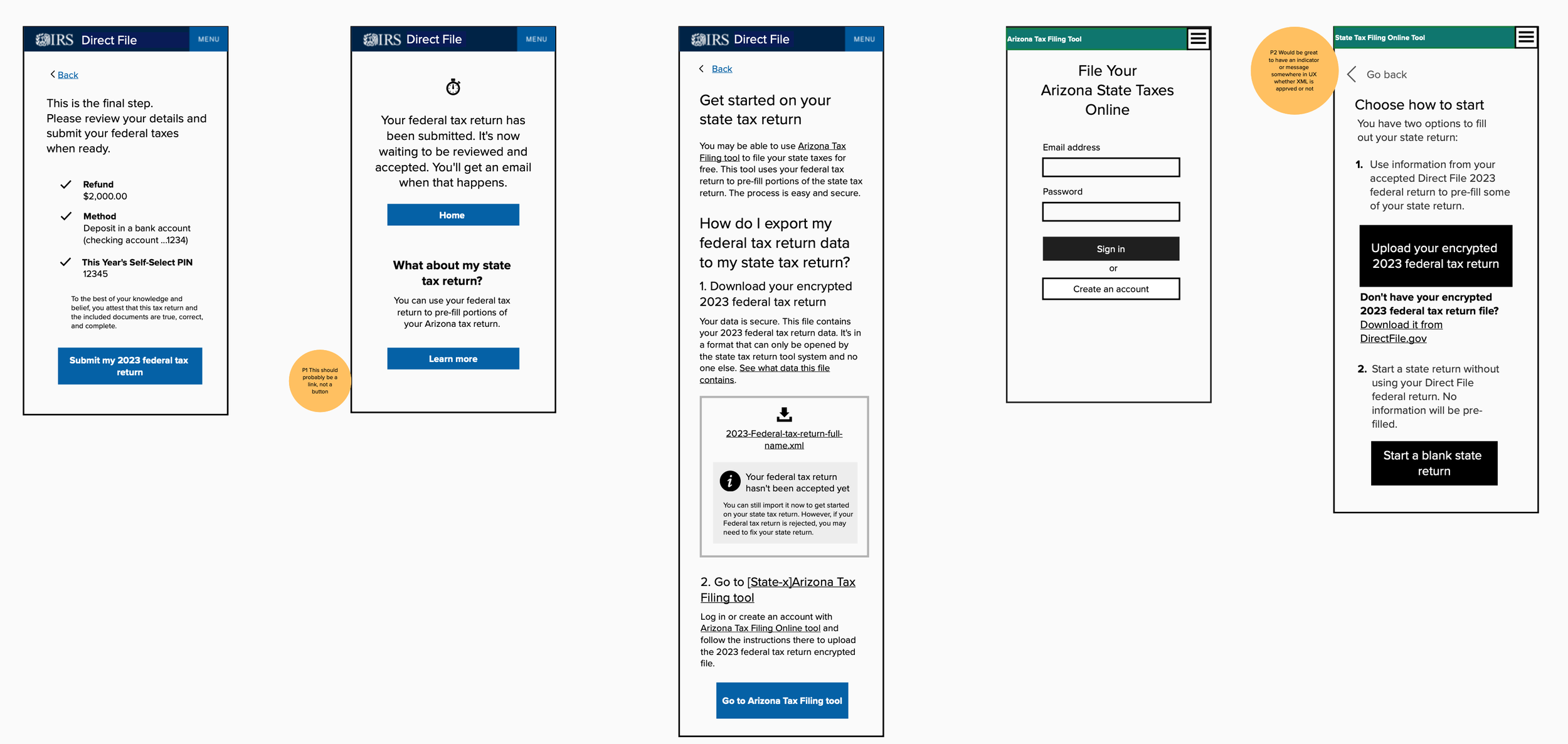
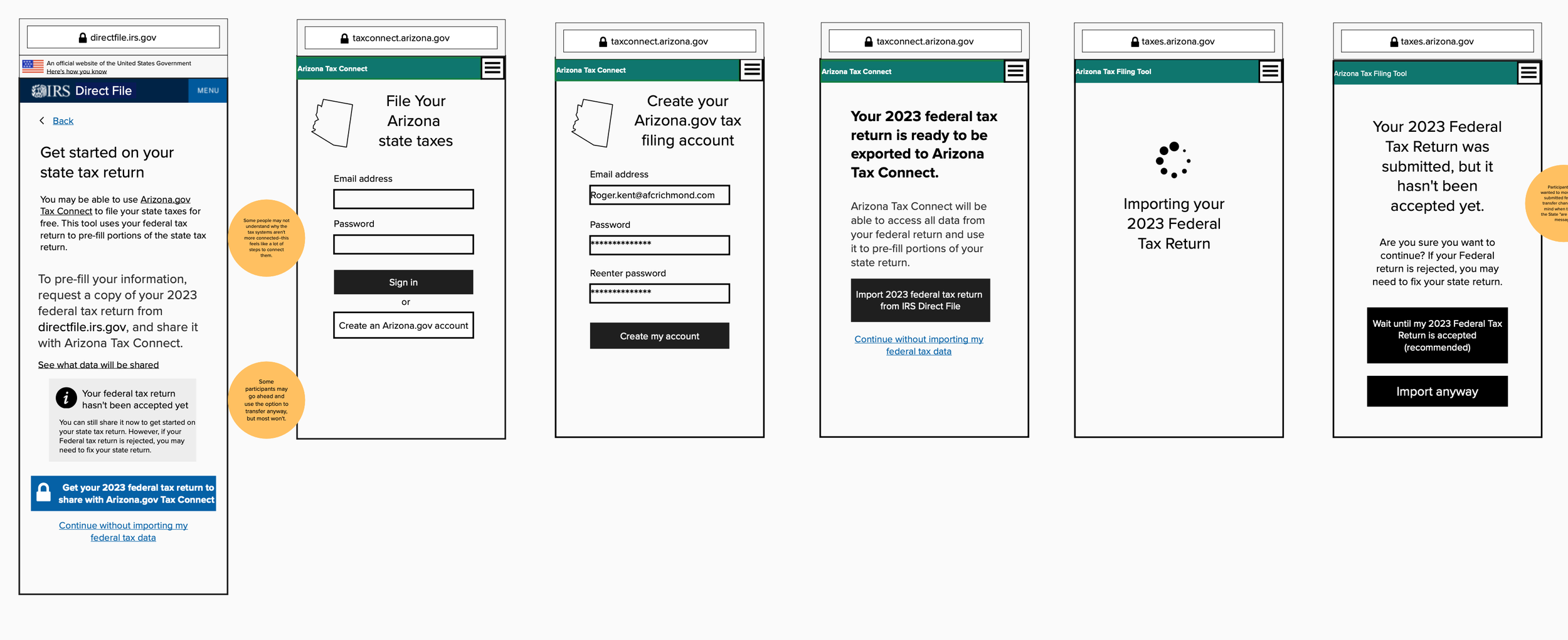
Evaluative Research
When I joined the Direct File team in June 2023, a quick discovery phase had already finished, and the design team had started working on detailed design. There was no dedicated research team.
Over time, I made a case for alleviating the burden of testing from designers by growing a dedicated research team and keeping a research roadmap. Designers remained closely involved in the process by helping define testing goals, observing and taking notes during sessions, participating in synthesis workshops, and quickly routing findings and recommendations back to the tool and the backlog.
The product team developed the MVP in time for tax season, with a lot of our testing pre-launch being done based on hypothetical situations and using only parts of Direct File, never the whole experience, until we finally launched. Our research team achieved all usability testing goals a month before our initial deadline.
Launch and Pilot Evaluation
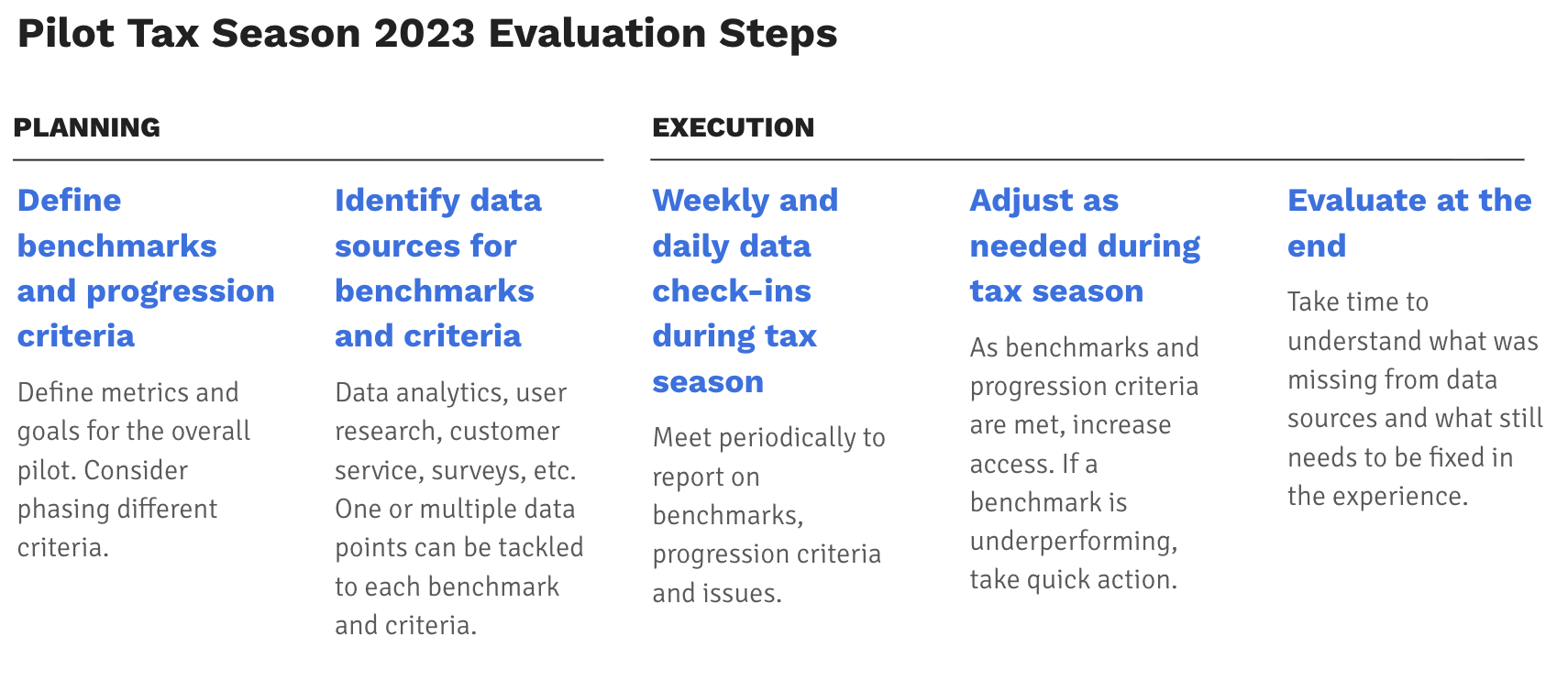
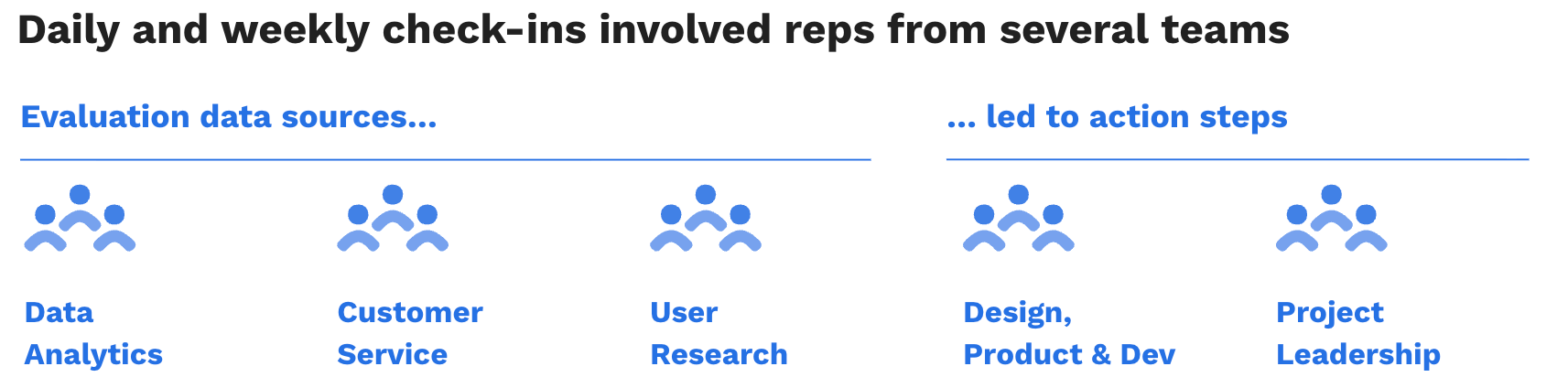
The user research team met with other teams weekly to learn and report findings. If analytics or customer service logs showed taxpayers struggling with parts of the tool, the user research team ran rapid usability testing on that part. In the meantime, we ran end-to-end observation sessions to see how taxpayers filed their taxes with their real tax forms and data using the live Direct File—something we couldn't do until launch, when the tool was ready.
The end-to-end observation sessions included studies we could only test with a live product:
Testing with real taxpayer documents and data from various tax situations (our team was the first to do this at the IRS)
Testing with users of assistive technologies and cognitive disabilities
Content testing of the Spanish version of Direct File
Our team was also responsible for:
Customer satisfaction surveys (which included NPS ratings)
Ad-hoc usability testing depending on issues arising from analytics and customer service reports
Feedback interviews with users who had filed their taxes using Direct File.
Foundational Research
The primary goal of the research team during the pilot launch was to ensure we found issues as soon as possible for the design and development teams to fix them quickly. Our secondary goal was to build additional foundational research that helped inform future iterations. A cross-analysis of all usability studies conducted during tax season helped us develop:
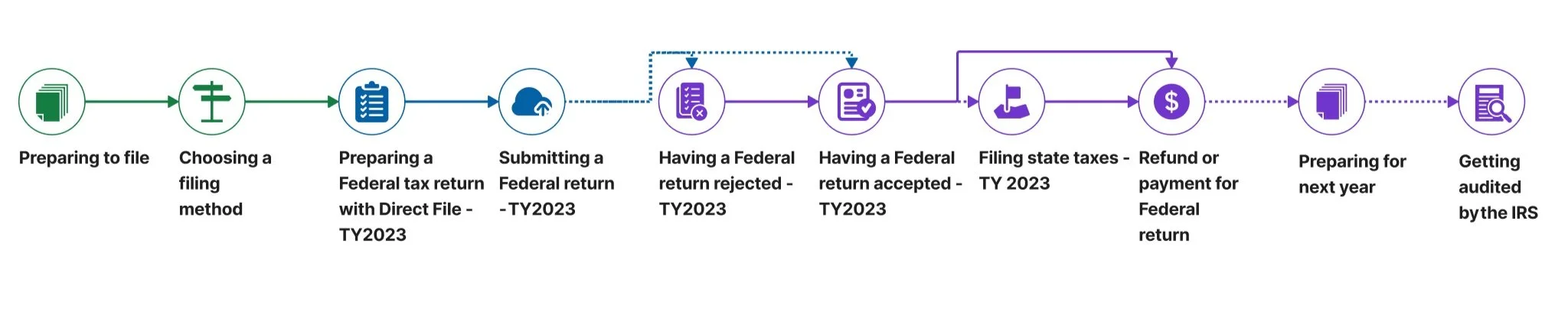
A journey map of the taxpayer using Direct File from the time they start thinking about taxes to the point of submission, refund/payment, and even tax audit—outlining pain points and needs each step of the way
An ecosystem outlining the factors, needs, and expectations that make each person's tax filing experience unique
A list of factors showing the role of trust, confidence, insecurity, and fear in the tax filing experience
Setting up research ops
Conducting research for the IRS is an extremely sensitive process, with many checks and balances, as tax information is the most protected data in U.S. government. This made starting research a high learning curve for researchers new to the team. As part of the second year of Direct File, I led efforts with the research team to:
Finalize a collection of recruitment screening, research plan, moderation guide, and insights reporting templates based on data collection activities the research team was allowed to perform as per Privacy and Civil Liberties Impact Assessments (PCLIA).
Document and centralize all practices related to research, e.g., recruitment protocols, instructions for notetakers and observers, data privacy and deletion schedules, etc.
Set up userinterviews.com as a major recruitment channel for Direct File evaluative research, while ensuring we were following policy.
Workshopped trauma-informed research protocols that fit the delicate task of asking taxpayers sensitive and deeply personal questions while representing a government agency many are intimidated by.
Set up a research roadmap and prioritization, opening a channel for all Direct File team members to make research requests.
“It was amazing, easiest taxes I've ever prepared! Really impressed that this was put together by the IRS.”
— Direct File User in 2024
“La información y pasos a seguir fueron muy claros de entender y muy fácil de seguir.”
“The information and steps to follow were very clear to understand and very easy to follow”
— Direct File User in 2024
“The way that it was laid out was just so darn easy to understand and I just see it being helpful for so many millions of people.”
— Dixie Warden, first Direct File user, AP News
“Direct File . . . [is] a glimpse of a world where government tech benefits millions of Americans.”
— Saahil Desai, The Atlantic
“The information is presented clearly, and I never found myself confused. The links that provide quick info (tooltips?) were especially good.”
— Direct File User in 2024
“My experience with entire system made me trust that my taxes were done correctly.”
— Direct File User in 2024
“Matthew Chaves, 19, a college sophomore from Durham, N.C., attending school near Boston, just filed his taxes himself for the first time as part of a test phase for Direct File. […] he was relieved to complete his federal return on his own in about half an hour. He said he also liked that his North Carolina state tax return automatically populated with his federal information. ‘It was super seamless,’ he said. ‘And also, it’s free!’ He’s expecting a refund of $40.”
“[Direct File is] a small step toward a world where people don’t need commercial tax software. But it’s a meaningful step, and the case for taking things slow is surprisingly compelling.”
— Dylan Matthews, Vox News